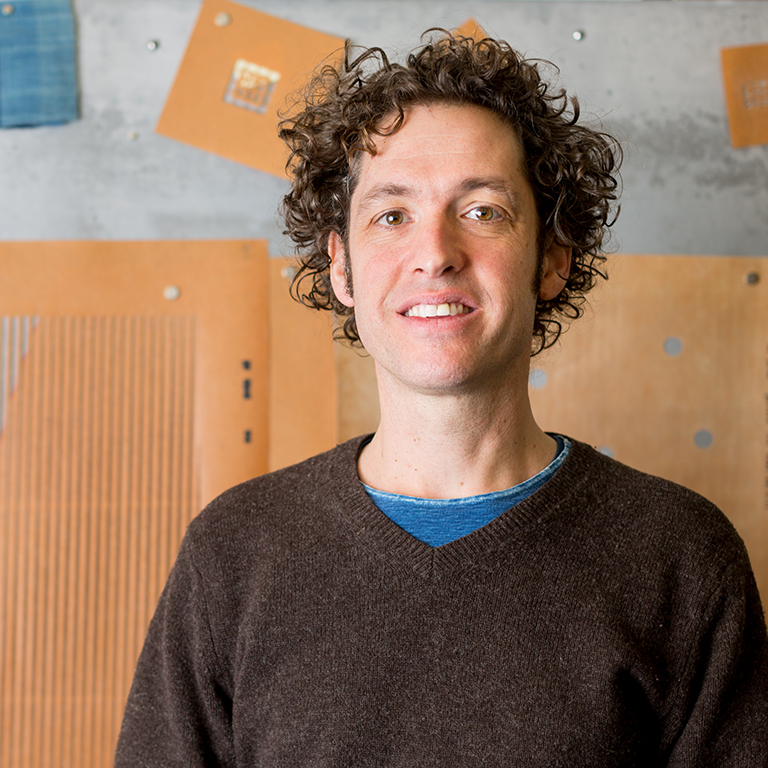
Rowland Ricketts utilizes natural dyes and historical processes to create contemporary textiles that span art and design. Trained in indigo farming and dyeing in Japan, Rowland received his M.F.A. from Cranbrook Academy of Art in 2005 and is currently an associate professor in Textiles at Indiana University. His work has been exhibited at the Textile Museum (Washington, D.C.), Cavin-Morris Gallery (New York), and Douglas Dawson Gallery (Chicago) and has been published in Textiles Now, Fiber Arts, Selvedge, Surface Design Journal, and Hand/Eye Magazine. Rowland is a recipient of a 2012 United States Artists Fellowship.


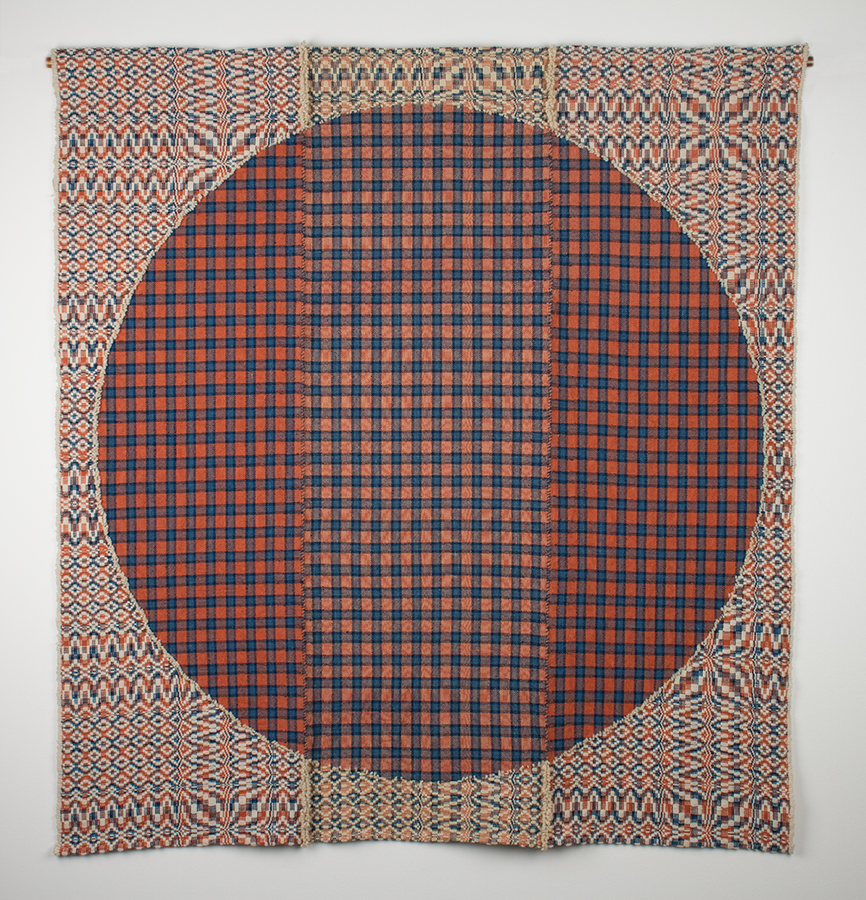
The smell of an indigo vat just as it begins fermenting and springs to life is one of ripeness; a moment of rich potentiality when, as a maker, I momentarily stand between the history of the materials and processes that helped me get the indigo thus far and the promise of all the works that the vat is still yet to realize.
I grow and process my own indigo (Polygonum tinctorium) using Japanese methods that are centuries old. The leaves are harvested, dried, and composted by hand to make the traditional Japanese indigo dyestuff called sukumo. The sukumo is in turn fermented in wood-ash lye to create a natural indigo vat.
My decision to work this way is one that consciously favors slower, natural processes and materials over more immediate, synthetic options. Today, with petroleum-derived indigo readily and cheaply available, my choice to plant, transplant, weed, harvest, winnow, dry, and compost the indigo by hand is not one of necessity. Instead it is a conscious act of recognition that all the energy extended in the farming and processing of the indigo plants is just as much a part of the final dyestuff as the indigo molecules themselves.
In addition, my own experiences with indigo – first as an apprentice in Japan followed by years of working with and learning from this dye – have made me aware of a connection that leads not just from my teachers to me, but one that reaches back to my teacher’s teachers and the people they learned from, back into a past in which the processes I use were developed through the accumulated experiences of all who have ever worked with this unique dye.
I find great value in this connection indigo provides to a greater human tradition. Of equal value to me is the time and energy I invest in the farming, processing, and fermenting of this dye. As a dyer I strive to transfigure all the energy of human endeavor expended on this dye so that its vitality lends its life to and lives on in the dyed cloth.
- MFA, Fibers Cranbrook Academy of Art, Bloomfield Hills, MI
- BA, East-Asian Studies Wesleyan University, Middletown, CT Japanese language, history, religions, art and achitecture
- Associated Kyoto Program, Doshisha University, Kyoto, Japan, Study Abroad
Area Coordinator, Textiles
Professor, Textiles rickettr@indiana.edu
Indiana University Bloomington

 NAFTAE