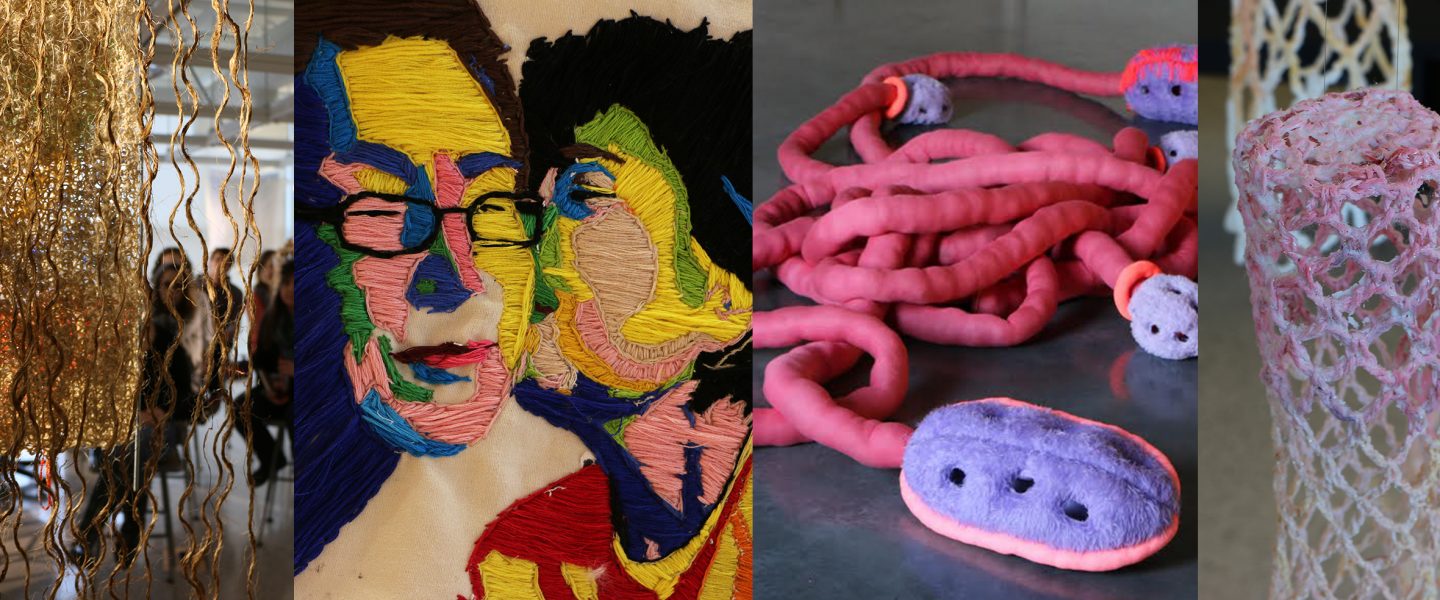

Mark Newport has presented solo exhibitions around the world. His work has been included in the prestigious 2009 Renwick Biennial, as well as group exhibitions at the Textile Museum of Canada, The Mint Museum, The Textile Museum at George Washington University, The Museum of Arts and Design, and the John Michael Kohler Art Center. Recent awards include grants from the Louis Comfort Tiffany Foundation, the Creative Capital Foundation, the Kresge Foundation, and the Arizona Commission on the Arts. Newport’s work is in the collections of The Whitney Museum of American Art, The Renwick Gallery of the Smithsonian American Art Museum, the Arizona State University Art Museum, Cranbrook Art Museum, and the Detroit Institute of Arts.
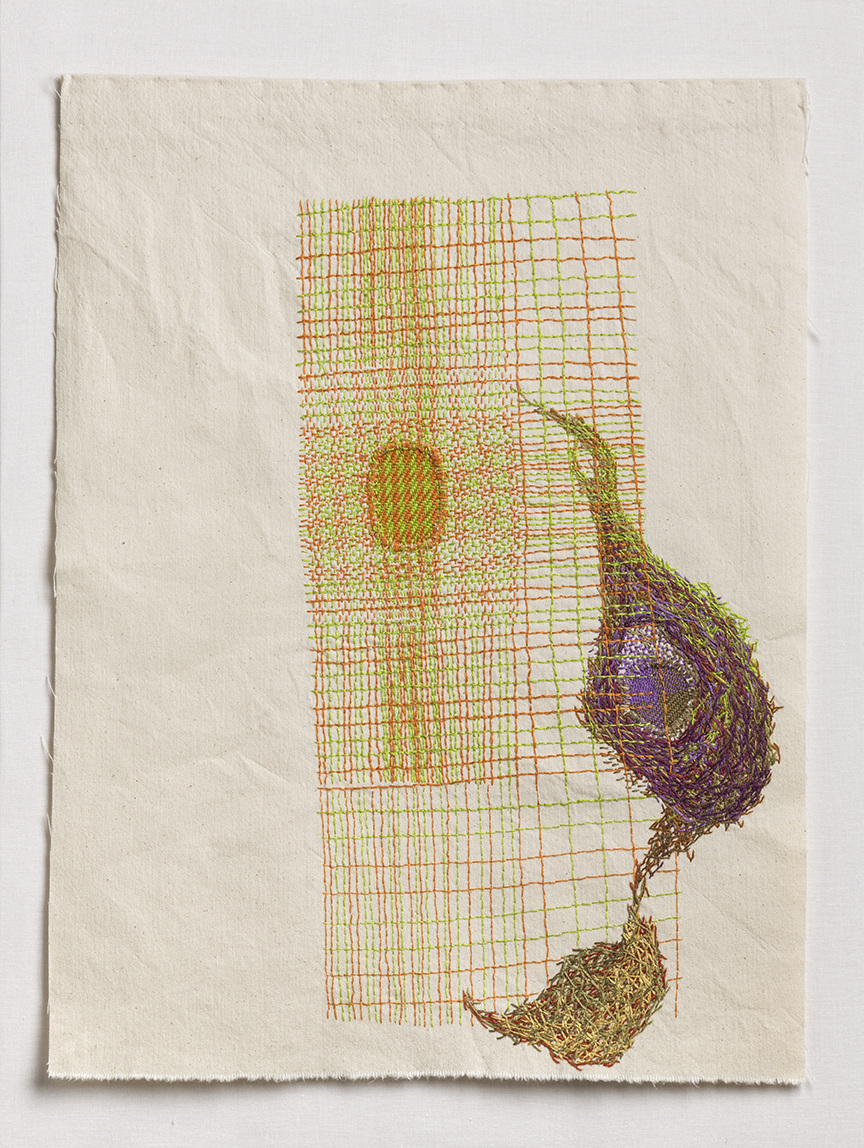

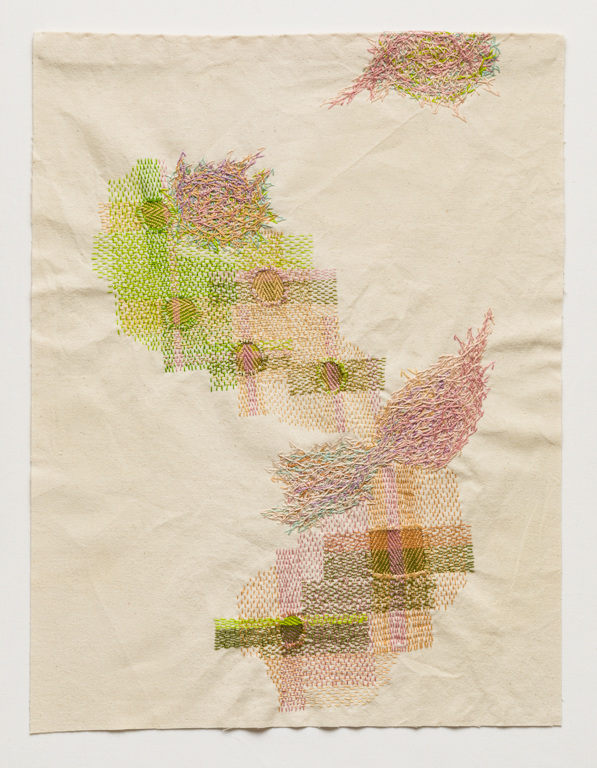
Textile and skin are intimately connected. Physical proximity causes sweat and strength, dirt and fear, love and cologne to embed in cloth and flesh indiscriminately. The mark left on our clothes and skin is the reminder of a story both epic and mundane that describes how we became who we are. Some of the marks left on our clothes and skin are subtle while others seem to embellish or contort the area around them. Scars in cloth and skin, distorted or delicate, can reflect the aggression of the initial wound and/or the sensitivity of the person who stitched them.
These works begin when I cut a hole into the cloth. The repairs are made using traditional textile darning and mending techniques learned from studying European and American mending samplers. Whether the area of repair is immediately visible or camouflaged, mending these holes leaves a scar that speaks of intimacy, vulnerability, and futility.
All photographs by Tim Thayer.
As I fold my son’s laundered clothes, the holes in the knees of his pants remind me of my childhood exploits, the falls that punctuated each adventure and the scars I carry from those accidents. My body and most often the knees of my pants would be repaired the same way: wash then patch (an iron-on patch for the pants and a Band-Aid for me). When things were more serious, stitches might be required for the body and the clothes would be discarded. Even then, darning and suturing leave a mark, a scar. Each pierces the substrate it is repairing, performing a modest violence upon what is to be mended, and reminding each of us of our sensitivity, vulnerability, and mortality. www.marknewportartist.com
- BFA at the Kansas City Art Institute
- MFA at the School of the Art Institute of Chicago

 NAFTAE