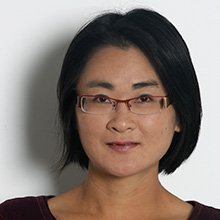
Seiko Atsuta Purdue is Associate Professor in the Fibers/Fabrics area in the Department of Art at Western Washington University. After receiving her Bachelor of Fine Arts at Kyoto Seika University in 1992, she came to the United States where she received an MA at Montclair State University and a Masters of Fine Arts from the School of the Art Institute of Chicago. She has exhibited widely, including participating in shows in New York City, Washington State (Seattle, Tacoma, Olympia, Vancouver, Bellingham, Anacortes, Bainbridge Island, San Juan Island), Illinois (Chicago, Evanston, and Bloomington), Canada (several sites including Montreal, Toronto, and Quebec City), Japan (Kyoto, Fukui, Kurashiki, and Osaka), Kherson, Ukraine where she received second prize at Scythia 5, and Kaunas, Lithuania at the 5th International Kaunas Textile Art Biennial, among other locations. In December 2005, she produced an art book as a 10-year retrospective of her ongoing art inquiry “Wish Tying.” In fall 2007 she co-curated a textile exhibition, “Fabric of Identity,” that investigated the representation of identities from a number of different perspectives. In 2011, she collaborated with her colleague Cara Jaye on an extension of the wish project, “Lofty Aspiration,” a large-scale paper sculpture made for the 50th Anniversary of the Viking Union at WWU.
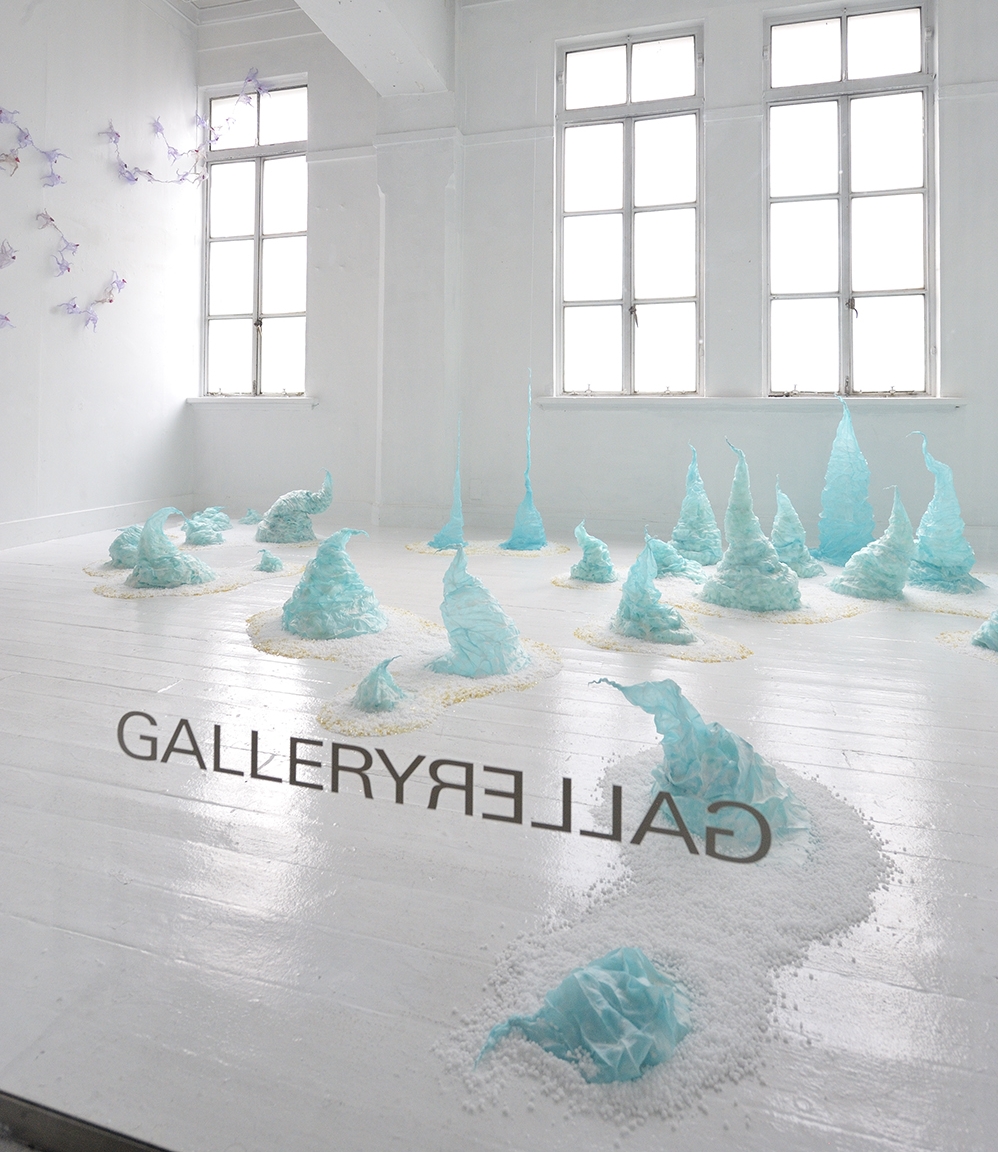
Much of her work is installation-based, using fiber materials (handmade paper, polyester, etc.) or ideas of fiber, seeking to connect East and West. She explores both traditional and contemporary textile techniques, as well as casting and digital media, and also involves the public in her art-making. “Berry Grove” and “Hyoga (Iceberg)” are recent large installation works. “Hyoga” is based on the concept of global warming and is an investigation of a landscape of melting ice using polyester and hand made paper. She has also explored the theme of motherhood in works such as “Toy Series,” and continues to work on the “Bullet Cloth” series.
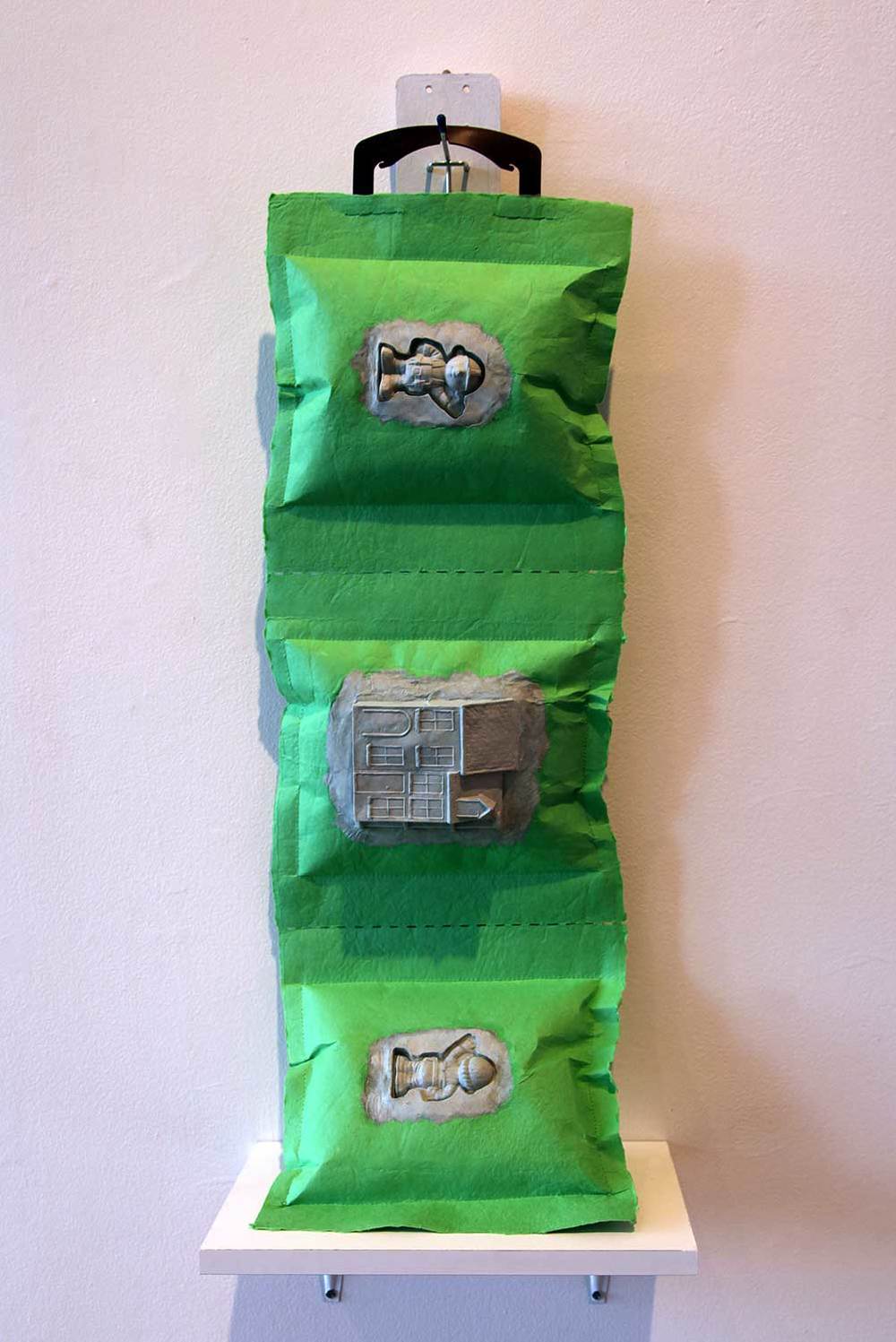
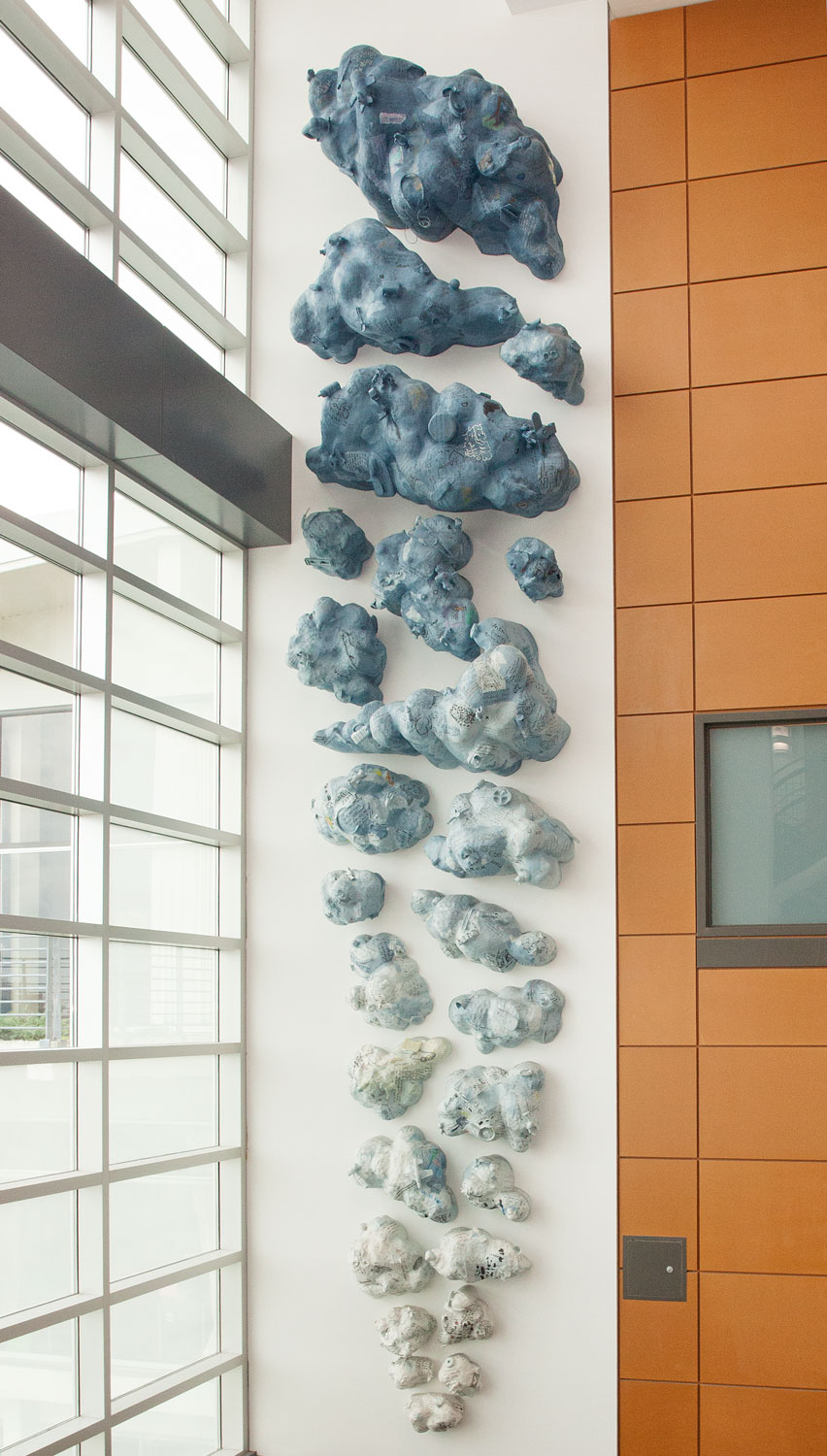
Most of my work since I moved to the United States has been a process of exploring connections between Japanese and American cultures. “Bullet Cloth IV” extends the previous motifs and materials (cast wax bullet forms) of the earlier Bullet Cloth pieces along with the wishes of people in Bellingham and Osaka where I am from. “Bullet Cloth IV” is also highly influenced by the war in Iraq and the conflict in Israel/Palestine as well as the 9/11 events. When considering these events, I can’t help but think about my own country’s tragic history. In countries that have not experienced the devastation of Hiroshima, it may be easy to forget the ordinary human lives at the center of the tragedy of war. The cloth of “Bullet Cloth IV” suggests wounded skin while also becoming a prayer formed by people’s wishes. The hair that came out from the body reminds me what I saw and heard in the horrifying past. As a metaphor of no limitation I use the form of cloth connecting many people’s wishes with my hair in a single cloth.
“Origami Cloth” is a piece made of the wishes from the Bellingham farmer’s market during the summer time. It is such a wonderful community spot where all local produce, foods, and arts/crafts invite many people to gather. I could not help interacting with the people there by introducing my wish project. Because I gave an origami workshop as another way to share Japanese culture while collecting wishes I encased the folded origami objects between the wish papers to create a quilt like hanging piece. The hair tassels give a ritualistic power to the piece.
“Sashiko Cloth” is a piece to connect where I live with my Japanese heritage. One of the wishes saying, in Japanese, “oishii sakana-ga tabetai” (I wish to eat good fish) inspired me. The Nothwest is somewhat similar to Japan in its climate, and in its tradition of fishing. Seafood and fishing is an important commonality to connect both places. I pieced together wish papers from Osaka and Bellingham, and stitched Sashiko (Japanese quilt) patterns to make a tablecloth. Sashiko patterns have traditionally been associated with Japanese fishermen’s coats. I picked two patterns; one is “amime” (fishing net) and the other is “shippo tsunagi” (Seven Treasures) that is common between the West and the East. I trimmed Sashiko Cloth with my crocheted hair and hung the hair tassels on four corners. Sashiko Cloth covers a circular table and integrates a found fishing net on the floor. I feel a strong connection with the 1000-stitched cloth (called sen-nin-bari) that was made by women during the WWII and used for solder’s protection. The playing cards (called Bozu-mekuri) on the Sashiko Cloth suggest the way to honor women’s handiwork as well as their spiritual and magical power to protect men.
“Kimono-Go: US Presidential Election Wishes” is a piece that has screen-printed wishes from Bellingham on the US election day in November, 2004. Because I don’t have a right to vote I had to do something on that day. I visited several cafes all over downtown Bellingham and collected wishes for the election. Some people were emotional and were willing to share their political opinions and concerns for our futures. I decided to integrate two universal Japanese things, “kimono” and “go” with the wishes. Since the election is a two person’s game to compete against each other, I use the form of “go”. The red and blue circular objects I made with fabric are movable like the black and white stones for a real “go” game. If one side moves the other side responds to that. It is like a dialog or conversation. The wishes are printed orderly following the grid structure of the “go” base on the front side, and on the other side I printed randomly, over-layering, and looking like graffiti to express my emotion.
I strongly desire to extend the range of wish collections to include many different communities and tie them together through my art making. Because I collect people’s wishes I feel that I have a responsibility to use them respectfully in my art. I feel that I am honoring people’s wishes by sharing them with the public. I want to expand my “Wish Project” globally and have people think about each other’s consciousness. I believe that it will be helpful for global understanding. http://www.seikopurdue.com
- Bachelor of Fine Arts at Kyoto Seika University
- MA at Montclair State University
- Masters of Fine Arts from the School of the Art Institute of Chicago
Associate Professor Western Washington University https://www.wwu.edu Seiko.Purdue@wwu.edu

 NAFTAE